

From 22 July 2026, Castel Sant’Angelo will host “Herculaneum. The Art of Living,” an extraordinary exhibition bringing the everyday life of one of the cities best preserved by the eruption of Mount Vesuvius in 79 AD to the heart of Rome.
For anyone staying in Rome and looking to discover a different side of the city, this exhibition is an unmissable experience. The exhibition takes visitors back in time through the objects that accompanied the daily lives of the ancient inhabitants of Herculaneum: food, cooking, wine, work, social life and conviviality.
A story dating back almost two thousand years that, surprisingly, still feels remarkably close to us.
Herculaneum Through the Stories of Everyday Life
The eruption of Mount Vesuvius in 79 AD was a tragedy that forever changed the fate of Herculaneum. At the same time, the pyroclastic flow helped preserve buildings, furnishings, tools, food and organic materials in exceptional condition.
This extraordinary preservation makes Herculaneum a unique source of knowledge about Roman society.
The exhibition brings to Rome artefacts from the collections of the Archaeological Park of Herculaneum, many of which are rarely displayed to the public. These are not simply works of art: they are tangible traces of the gestures and habits of people who lived almost two thousand years ago.
Among the most fascinating objects on display is the famous carbonised bread, preserved together with food, tableware, furnishings and everyday tools.
Looking at these objects is almost like stepping back in time: entering ancient homes, imagining their kitchens, shops and dining tables, and discovering how the inhabitants of Herculaneum lived their daily lives.
A Wunderkammer Inside Castel Sant’Angelo
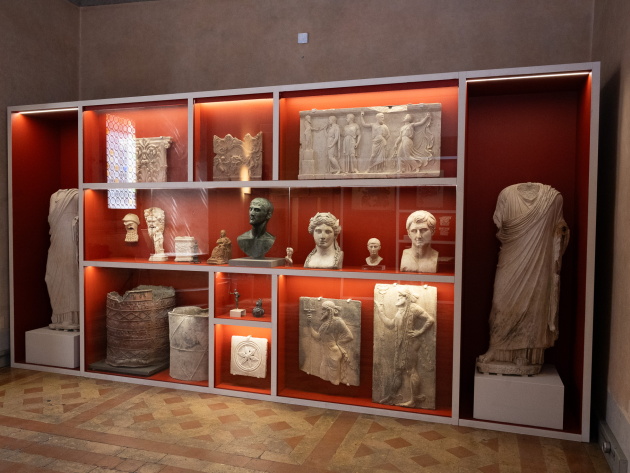
The exhibition opens with a fascinating Wunderkammer, inspired by the famous “cabinets of curiosities” of the Renaissance.
Here, visitors can admire 42 exceptional artefacts from the collections of the Archaeological Park of Herculaneum, including statues, busts, frescoes, jewellery and objects from everyday life.
The display invites visitors to experience a sense of wonder while discovering a heritage that is normally kept away from exhibition spaces.
It is a particularly evocative introduction to the central theme of the exhibition: not simply telling the great story of Herculaneum, but bringing back to life the people who inhabited the city.
The Eruption of Mount Vesuvius and the Grand Tour
From the Wunderkammer, the exhibition leads visitors into the heart of the event that changed the city’s destiny forever.
An immersive room, enriched by audiovisual content, paintings, prints and decorative arts, tells the story of the eruption of Mount Vesuvius and the evolution of the volcano’s image in the European imagination.
The journey continues into the age of the Grand Tour, when Vesuvius and the cities buried by its eruption became some of the most fascinating destinations for travellers visiting Italy.
Shops and Thermopolia: Discovering a Lively Ancient City
The exhibition then changes perspective and takes visitors into the heart of everyday urban life.
The journey continues through the shops and thermopolia, ancient establishments where ready-to-eat food and drinks were sold.
Multimedia installations and archaeological artefacts bring the city back to life, revealing a dynamic community shaped by commerce, work, social encounters and everyday activities.
This is one of the most fascinating aspects of the exhibition: Herculaneum does not appear as a distant and static city from the past, but as a vibrant community filled with people working, shopping, cooking and socialising.
What Did the Ancient Romans Eat?
One of the most intriguing sections of the exhibition is dedicated to food, kitchens and pantries.
Mortars, pots, pans and other kitchen utensils, together with organic remains such as grains and legumes, provide valuable insights into the dietary habits of the ancient inhabitants of Herculaneum.
The exceptional preservation of these materials allows archaeologists to investigate not only what people ate, but also how food was prepared and the culinary practices of the community.
For today’s visitors, this is a fascinating way to discover that behind the grand history of the Roman Empire was an everyday world of ingredients, cooking tools and familiar domestic gestures.
Wine, Falernian and the Cult of Bacchus
A dedicated section explores wine, one of the most important elements of Campanian culture and production during the Roman period.
Among the highlights is the celebrated Falernian wine, considered one of the most prestigious wines of antiquity and mentioned by Pliny the Elder.
Wine was far more than a beverage: it was deeply connected to culture, conviviality and the cult of Bacchus, the god of wine, fertility and celebration.
This part of the exhibition feels particularly relevant today, highlighting the enduring relationship between territory, food, wine and the pleasure of sharing a meal — all essential elements of Italian culture.
The Roman Banquet: A Reminder to Enjoy the Present
The exhibition concludes with a section dedicated to the Roman banquet, where precious objects and fascinating artefacts recreate the atmosphere of ancient convivial gatherings.
Among bronze bells and fine glass, bronze and silver tableware, visitors will encounter the larva convivialis, a small skeletal figure reminding diners of the brevity of life.
After almost two thousand years, its message remains surprisingly powerful: life is short, and every moment of sharing and togetherness should be fully enjoyed.
An Exhibition to Discover During Your Stay in Rome
“Herculaneum. The Art of Living” is much more than an archaeological exhibition.
It is an invitation to look at the ancient world through the eyes of the people who lived there. Through bread, food, everyday tools, wine, shops and dining tables, visitors discover a Roman city shaped by daily routines, work, passions and conviviality.
For this reason, it can become one of the most memorable experiences to add to your Rome itinerary.
After visiting the Colosseum, the Pantheon, Rome’s historic squares and magnificent fountains, take a journey even further back in time: step inside Castel Sant’Angelo and discover the story of Herculaneum through objects that have survived almost two thousand years of history.
Practical Information for Your Visit
Herculaneum. The Art of Living
📍 Castel Sant’Angelo – Lungotevere Castello 50, Rome
📅 From 22 July 2026
🕘 Tuesday to Sunday, 9:00 am–7:30 pm
🎟️ Last admission: 6:30 pm
🚫 Closed on Mondays
The exhibition is located in the Clement VII Rooms, the Hall of Justice and the Clement VIII Rooms.
The standard admission ticket to Castel Sant’Angelo is currently €18, while the reduced ticket is €2, subject to the exemptions provided by Italian regulations. Booking in advance is recommended, particularly for weekends and public holidays.
Where to Buy Tickets
Tickets can be purchased online through the official Musei Italiani platform.
Book your tickets online through Musei Italiani
For the latest information about the exhibition, opening hours and visiting arrangements, please consult the official website of the Directorate of National Museums of the City of Rome.
Official information – Castel Sant’Angelo
Contact Information
Castel Sant’Angelo
Lungotevere Castello 50, 00193 Rome
Phone: +39 06 6819111